




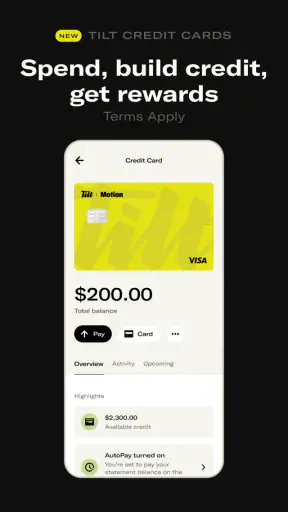
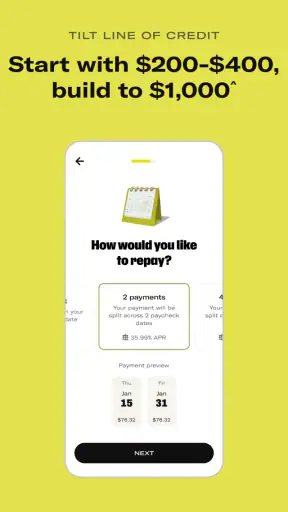
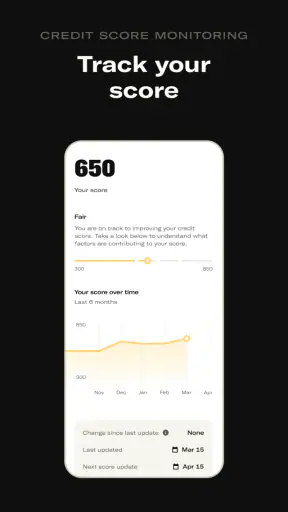
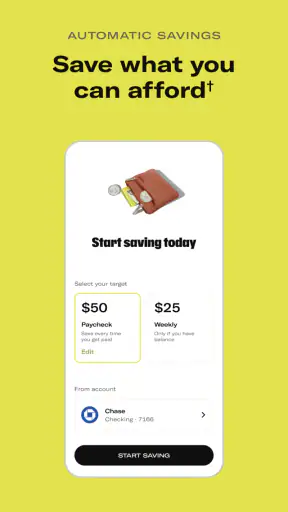

When money is tight between paydays, the hardest part is often not finding a long-term financial plan. It is getting through one ordinary expense without turning a small gap into a larger problem. That is the situation I kept in mind while reviewing Tilt: Cash Advance & Credit, a free finance app from Tilt Finance. Its central appeal is simple: it looks beyond a single credit-score number and tries to give people another way to approach short-term cash and credit.
I found the app most interesting as a practical tool for a specific moment, not as a replacement for a bank, a budgeting system, or careful borrowing habits. The experience begins with a personal financial need and ends with a decision about whether the available option genuinely helps. Between those points, the important details are the information you enter, the checks the app performs, the way money or credit is handed off, and the repayment consequences you need to understand before accepting anything.
That distinction matters. A finance app can feel helpful because it responds quickly, yet the real test is whether it leaves you in a better position after the immediate problem has passed. My overall impression is that Tilt can be worthwhile for people who need an alternative to conventional credit evaluation, but it demands attention rather than blind trust. The convenience is useful; the responsibility remains yours.
From an urgent expense to a clearer borrowing decision
Starting with the situation you actually have
Imagine a routine expense arriving at the wrong time: a bill, transport cost, household purchase, or another necessary payment before your next income arrives. In that moment, many people immediately compare bank overdrafts, credit cards, payday-style products, or asking someone they know for help. Tilt belongs in that comparison, but I would not treat it as an automatic answer simply because the application is free to install.
The first useful question is not “How much can I get?” It is “What exactly am I trying to cover, and when can I realistically repay it?” I recommend writing down the expense and the date your available money changes. That small step prevents the app from becoming a way to borrow vaguely. If the expense is optional, waiting may be better. If it is essential and temporary, a short-term option may make sense. If the gap is recurring, the real issue is probably your monthly cash flow rather than one isolated emergency.
Tilt’s store summary presents it as cash and credit for more people, with an emphasis on being more than a credit score. In practice, I read that as an invitation to explore an alternative route when a traditional lender’s assessment does not reflect your wider circumstances. It should not be read as a promise that every applicant receives the same outcome. Financial decisions remain personal, and eligibility can depend on information and checks within the app’s process.
The app has a broad audience in mind: its content rating is Everyone, and it is available at no charge. That makes the first step approachable, but “free” only describes access to the app itself. It does not mean that any cash or credit product is cost-free. Before agreeing to anything, I would look carefully at the amount received, the total amount due, the timing, and any terms shown during the application.
Moving through the application without rushing
Once I had a clear reason for using it, the next stage was to work through the app’s prompts carefully rather than tapping through them as quickly as possible. A finance application needs accurate personal and financial information because the result depends on what it can assess. A mistyped figure or an incomplete answer can create confusion later, especially when the outcome does not match what you expected.
My practical advice is to keep the original expense in view while completing the process. Do not increase your target merely because a larger amount appears possible. Borrowing more than the immediate need can turn a useful bridge into a repayment burden. I also prefer checking every summary screen before continuing, particularly where the app presents an offer, repayment schedule, or other commitment.
This is one of the less obvious strengths of using a dedicated finance app: it puts the decision in a structured sequence. Instead of making a hurried choice from a text message or a search result, you have a place to review the request and its context. The weakness is that a polished flow can make borrowing feel easier than it really is. The smoother the screen-to-screen experience becomes, the more deliberately I believe the user should pause.
Tilt Finance is the developer behind the app, and the product has been available since December 4, 2017. That gives it a longer presence than a brand-new finance tool, while the current version is 7.62.0.847. I would still keep the app updated and read each current screen rather than relying on an old explanation from someone else. Financial products can change in presentation and terms even when the basic purpose remains familiar.
The handoff between the app and your financial life
The most important part of the workflow happens when the app’s assessment meets your real financial situation. Tilt may help connect a user with a cash or credit option, but the app cannot remove the handoff that follows: money has to arrive where it is needed, and repayment has to fit around income that may already be committed elsewhere.
I would treat the displayed outcome as an offer to examine, not a verdict about what I should accept. Before proceeding, I would compare the timing with the actual due date of the expense. Receiving help after a bill is already late may not solve the original problem. Likewise, a repayment date that lands before your next dependable income can create a second emergency.
Another useful habit is separating the app’s role from the provider’s role. The app is the interface through which you explore or manage the process, while the financial obligation is the part that affects your budget. If you need to understand a repayment question, read the relevant terms and use the support route shown in the app. Do not assume that a general explanation of Tilt answers every detail of a particular offer.
This handoff is also where Tilt differs from simply asking your existing bank for an overdraft. A bank may already have a view of your account activity and may offer familiar controls, but its decision can be tied closely to conventional banking criteria. A credit card can provide reusable flexibility, but it may encourage spending beyond the original need. Tilt is more appealing when those alternatives are unavailable or unsuitable, yet it is less appropriate if you already have a low-cost, manageable option through your bank.
What the result should look like
A successful result is not merely seeing an approval screen. For me, the outcome is a completed necessary payment followed by a repayment plan that does not disrupt essentials such as housing, food, utilities, or transport. If accepting the offer means immediately sacrificing those priorities, the short-term solution is not really solving the problem.
A realistic example would be a worker who has enough income overall but faces a timing mismatch before the next pay cycle. They could use the app to investigate whether a suitable cash or credit option is available, review the obligation, and cover the urgent expense. The workflow only works if they then reserve the repayment amount instead of treating the advance as extra spending power. I would put a reminder in my calendar and mentally remove that amount from the next available income before making any other nonessential purchase.
That repayment-first mindset is a concrete way to use the app more safely. I would also keep a record of what was accepted, when payment is due, and how much money must remain available. Even if the app displays those details clearly, having your own note makes it easier to compare the commitment with your bank balance and other bills. This is especially helpful when several automatic payments are scheduled around the same time.
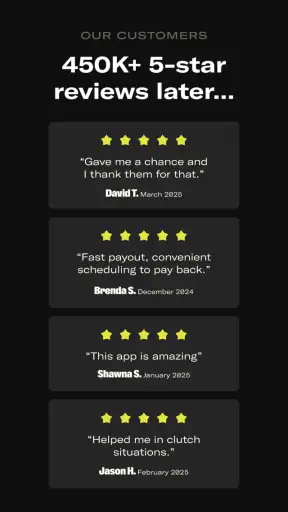
The app’s scale suggests that it has reached a substantial audience: it has over five million installs, an average rating of 4.6, and around three hundred thousand ratings. Those figures tell me that many people find the product useful enough to try and rate, but they do not predict my individual eligibility or guarantee that every experience will be smooth. I use popularity as a reason to investigate an app, never as a substitute for reading its terms.
Where the flow becomes uncomfortable
The first point of friction is emotional. Applying for cash or credit can make a user focus on immediate relief and ignore the later cost. Tilt’s accessible presentation may reduce some of the intimidation associated with traditional lending, but it cannot make repayment painless. If you are already borrowing to cover earlier borrowing, I would step back and consider debt advice or a broader budget review instead of continuing through another application.
The second difficulty is that an alternative to a credit score is not the same as no assessment. You still need to provide information and wait for the app’s process to determine what, if anything, is available. Someone looking for guaranteed approval will probably be disappointed. Someone willing to review an outcome carefully may find the approach more relevant than a conventional score-only experience.
The third issue is comparison. A user may see a convenient option and stop checking alternatives. I would compare the total repayment and timing with an existing bank facility, a credit union or another legitimate source available in your circumstances. The cheapest option is not always the one with the fastest application, and the most familiar option is not always the most flexible. Tilt earns consideration because it may serve people overlooked by usual routes, not because every offer will beat every alternative.
There is also a practical technology limitation. The app requires Android 7.0 or later, so an older Android phone may not be compatible. That is not a problem for most current devices, but it is worth checking before planning around the app during an urgent financial situation. I would rather discover compatibility at the beginning than when a payment deadline is approaching.
Who will benefit most from the workflow
I think Tilt is best suited to an adult who understands the difference between a temporary cash gap and a permanent budget shortfall. It may be particularly relevant when a traditional credit score does not tell the whole story and when the user is prepared to provide accurate information, compare the result, and repay on schedule.
It is also useful for someone who wants a structured way to investigate cash or credit rather than making an informal decision under pressure. The app’s value is not only the possibility of access; it is the chance to place the request, assessment, and repayment question in one connected journey. That structure can help a careful user avoid borrowing blindly.
I would skip it if I needed a full budgeting platform, investment tools, detailed bank-account management, or long-term debt planning. Tilt is focused on cash and credit, so it should not be mistaken for a complete personal-finance dashboard. I would also skip it if I could comfortably handle the expense by waiting, using savings, or choosing a clearly cheaper existing facility. Convenience is not a reason to pay for a problem that can be solved without borrowing.
How it compares with familiar alternatives
Compared with a standard credit card, Tilt may feel more relevant for a defined short-term need rather than ongoing spending. A card can be convenient and widely accepted, but its reusable balance can blur the line between an emergency purchase and ordinary shopping. Tilt’s appeal is stronger when you want to examine a specific cash or credit route and then focus on the resulting obligation.
Compared with a bank overdraft, the app may offer a different assessment path for people who do not fit neatly into conventional lending decisions. The bank has the advantage of familiarity and an existing relationship, while Tilt’s advantage is the possibility of reaching users who feel underserved by score-based decisions. I would compare the complete cost and repayment timing instead of choosing based on brand familiarity.
Compared with payday-style borrowing, the sensible comparison is not just speed. Look at the total amount you must return, how soon it is due, and whether the commitment leaves enough for your normal expenses. Tilt may be preferable when its terms fit your situation better, but the app’s friendly interface should never be used as evidence that an offer is automatically affordable.
Small habits that make the experience safer
I would begin by naming the expense before opening the application. That sounds basic, but it creates a boundary: the request is for a defined purpose, not a general increase in spending money. After entering the information, I would reread every amount and date, then compare the proposed repayment with my next dependable income.
My second habit would be to calculate the remaining budget after repayment, not before it. If the answer leaves no room for food, travel, or an unexpected essential, the offer is too large or the timing is wrong. This is a more useful test than asking whether the monthly or scheduled payment looks small in isolation.
My third habit would be to save the important details in a private note and check the account before the due date. That creates a handoff from the app to my own money management. If circumstances change, I would seek help through the appropriate support channel early rather than waiting until a missed payment becomes the main issue.
Finally, I would keep the app’s permissions and notifications relevant to the task and avoid treating every prompt as something that must be accepted immediately. A finance app deserves the same caution as any service handling sensitive personal information. Use the official app-store listing and the app’s own support paths, and be wary of messages asking for credentials outside the normal process.
My conclusion after following the full journey
Tilt: Cash Advance & Credit is a focused finance app with a clear reason to exist. It gives people a way to explore cash and credit when a conventional credit-score view may not reflect their situation, and its free access makes that first investigation easy. The strong user response, with more than one hundred thousand written reviews, supports the impression that it has become a familiar option for many people.
My recommendation is conditional but positive: I would suggest trying it when the need is specific, the repayment date is realistic, and you are willing to compare the complete obligation with other choices. I would not recommend opening it simply because money feels available, nor would I use it to cover a recurring deficit without addressing the underlying budget.
The app works best when the user remains in control of the workflow: define the need, enter information carefully, inspect the result, understand the handoff, reserve the repayment money, and stop when the terms do not fit. Used that way, Tilt can be a practical bridge for a difficult moment. Used impulsively, it can make a temporary shortage harder to escape.


